
What Kind of Exercise Helps With Belly Fat After Menopause?
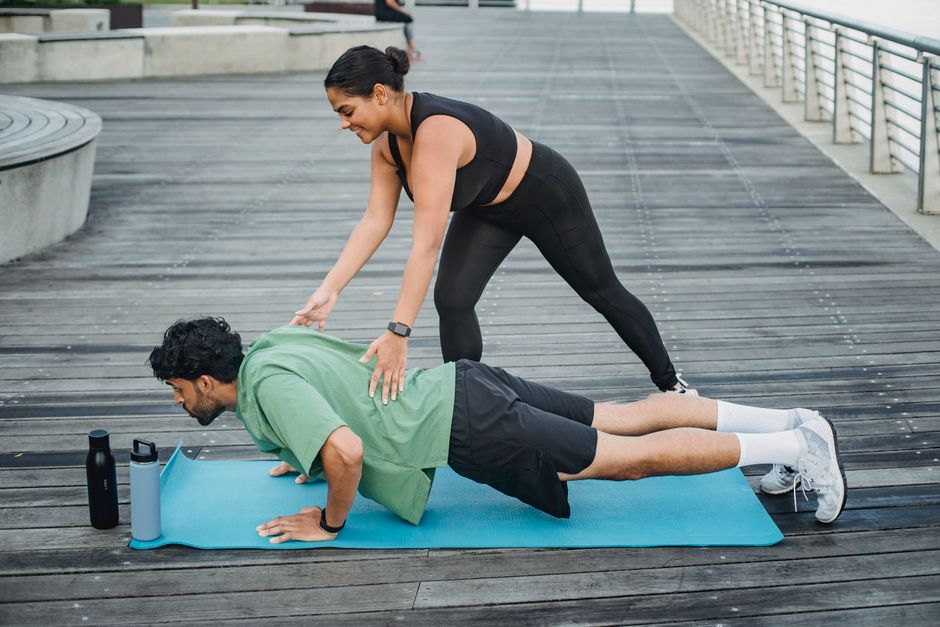
A sustainable combination of moderate aerobic activity and strength training is the best-supported starting point for addressing menopause-related abdominal fat while maintaining strength and recovery. Federal guidance recommends 150 to 300 minutes of moderate aerobic activity each week and muscle-strengthening activity on at least two days. Walking can count; the evidence does not show that everyone needs intense workouts.
What kind of exercise helps with belly fat after menopause?
Moderate aerobic activity combined with regular resistance training is the most practical evidence-based approach for addressing abdominal fat and preserving strength. Belly fat is not one uniform thing: visceral fat lies around abdominal organs, while subcutaneous fat sits under the skin. Exercise studies measure these differently, so a change in waistline does not by itself reveal precisely which type of fat changed.
The Menopause Society’s 2025 weight-gain guide describes aging as the primary driver of midlife weight gain and menopause as associated with redistribution of fat toward the abdomen. The same guide reports muscle loss of about 3% to 8% per decade after age 30, and recommends at least 150 minutes of moderate aerobic activity weekly plus strength training twice a week. These figures describe population-level guidance and patterns, not a guaranteed personal outcome.
Federal guidance from the U.S. Department of Health and Human Services recommends 150 to 300 minutes of moderate-intensity aerobic activity each week, alongside muscle-strengthening activity on at least two days. Brisk walking is one example of moderate activity; the talk test is straightforward: you can talk, but not sing. If you are currently inactive, the federal guidance is to begin with small amounts and build gradually. Short bouts still count as activity, rather than being wasted because they do not fill a long workout block.
A realistic week can distribute activity instead of concentrating it into exhausting sessions. For example, walking on several days and strength training on two nonconsecutive days can help balance aerobic work with recovery. This is an organizing example, not a prescribed program: time, baseline fitness, health, and joint comfort change what is workable.
| Activity | Evidence-based role | Practical implication |
|---|---|---|
| Moderate aerobic activity | Federal guidance sets a weekly range of 150 to 300 minutes. | Brisk walking can contribute; use the talk test to gauge moderate effort. |
| Strength training | Guidance calls for muscle strengthening at least two days weekly. | Keep resistance work in the plan rather than relying on cardio alone. |
| Higher-intensity intervals | A small trial found benefits, but does not establish that intensity is required. | Consider it an option, not a prerequisite. |
Is strength training or cardio better for menopause-related weight gain?
Neither strength training nor cardio is a complete substitute for the other: aerobic activity supports the weekly movement target, while resistance training directly addresses muscle strength. The strongest practical answer is to combine them, not to search for a single winning exercise.
A randomized study by Nilsson and colleagues, published in 2023 in Maturitas, assigned 65 low-activity postmenopausal women with vasomotor symptoms to supervised resistance training three days weekly or unchanged activity for 15 weeks. Among participants attending at least two of the three weekly sessions, changes over time in visceral and subcutaneous abdominal fat differed significantly from the control group. The finding supports resistance training as a useful component; the study was short and specific to its participants, so it does not guarantee an individual result.
Walking has evidence too. In a 2003 randomized trial published in JAMA, McTiernan and colleagues compared moderate-intensity exercise with stretching among 173 sedentary, overweight postmenopausal women aged 50 to 75 over 12 months. The exercise group averaged about 176 minutes of activity weekly across 3.5 days, with walking the most frequently reported activity. Compared with controls, exercisers had a 1.4 kg greater reduction in weight and a 1.0 percentage-point greater reduction in total body fat. However, reductions in intra-abdominal fat were not statistically significant. That distinction matters: improvement in weight or total body fat does not prove a measurable reduction in visceral fat in every study.
For a budget-minded routine, walking requires little equipment, and strength work can be adapted to available resources and physical capacity. When time is limited, short activity sessions that accumulate toward the weekly target are consistent with federal guidance. When joints are uncomfortable or fitness is low, begin at a manageable level and increase gradually; the supplied evidence does not specify a single joint-friendly exercise prescription.
Can exercise reduce visceral fat during perimenopause?
Exercise can help reduce visceral fat in some study populations, but the available research does not promise a particular reduction for each person or establish one ideal workout. Visceral fat surrounds internal organs; subcutaneous fat is beneath the skin. Menopause-related redistribution toward the abdomen can make waist trends relevant, but waist measurement is a practical marker, not a direct measurement of visceral fat.
The 2023 Nilsson study reported significant differences in abdominal visceral and subcutaneous fat changes for qualifying resistance-training participants compared with controls. A separate 2018 randomized trial by Nunes and colleagues, published in Menopause, included 26 obese postmenopausal women. Participants completed either high-intensity interval training (HIIT) or combined walking and resistance training three times weekly for 12 weeks. Both groups reduced body-fat percentage and visceral adipose tissue; the HIIT group showed a greater reduction in visceral adipose tissue.
That result is not a mandate to train at high intensity. The trial was small, and its comparison does not show that HIIT is necessary, appropriate for all fitness levels, or superior for every health outcome. It does show that more than one training format was associated with reductions in that study. The broader plan can therefore prioritize consistency, strength, and recoverable aerobic activity rather than treating exhaustion as evidence of effectiveness.
Waist measurements and other health markers can be monitored with a clinician, according to The Menopause Society’s 2025 guide. A trend may be more informative than a single reading, but public data here does not define an ideal waist-change threshold or measurement schedule. Discussing the trend alongside other health markers avoids treating abdominal appearance as the only measure of health.
Frequently Asked Questions
How often should women over 50 strength train?
Federal physical activity guidelines recommend muscle-strengthening activity on at least two days each week. The Menopause Society’s 2025 guide gives the same weekly minimum. The research does not establish one ideal schedule for every person, so fitness, health, and recovery affect how sessions are arranged.
Do I need intense workouts to manage menopause belly fat?
No evidence here establishes intense workouts as necessary for everyone. A small trial found reductions in visceral fat with both HIIT and a longer walking-plus-resistance program, while federal guidance supports moderate activity such as brisk walking. Start from current activity and build gradually.
Sources
- The Menopause Society, 2025 midlife weight-gain guide
- U.S. Department of Health and Human Services, Physical Activity Guidelines questions and answers
- Nilsson et al., Maturitas, 2023
- McTiernan et al., JAMA, 2003
- Nunes et al., Menopause, 2018
Disclaimer: This article is for general information only and is not medical advice. It is not a substitute for diagnosis or treatment by a qualified healthcare professional. Always speak to your doctor before acting on anything you read here.
You may also like

Why Has My Weight Loss Stopped, and What Should I Change?
Learn how to assess a suspected weight-loss plateau, audit food tracking, and make measured changes to activity without drastic cuts.
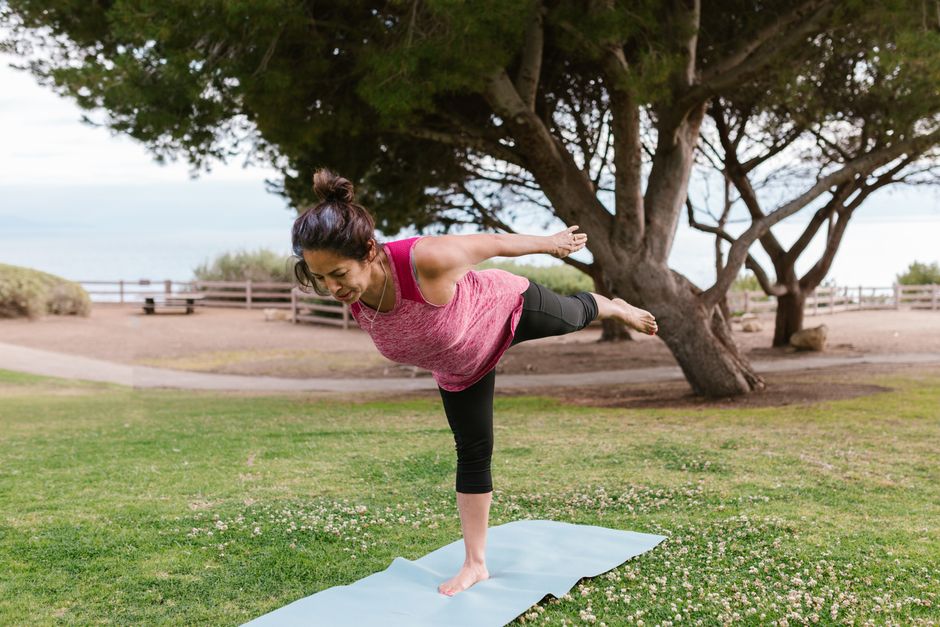
Why Do I Wobble on One Leg, and How Can I Improve?
A practical, low-equipment progression for steadier single-leg balance, with form cues, ways to scale exercises, and signs to seek clinical advice.
How to Choose a Weight-Loss App Without Falling for Belly-Fat Claims
Compare weight-loss apps by their behavior tools, visceral-fat claims, privacy terms, and free-trial cancellation rules.

How Do I Choose a Local Zumba Class and Prepare for My First Session?
A practical guide to comparing beginner Zumba classes, preparing safely, choosing modifications, and finding an instructor who fits.