
Why Does My Jeep Renegade 4xe Start the Petrol Engine?
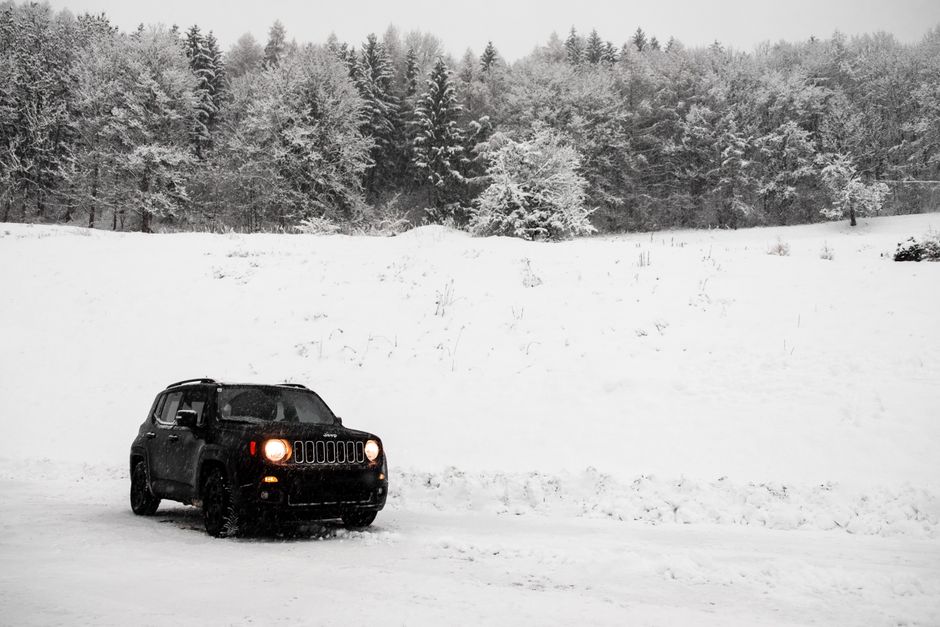
A Jeep Renegade 4xe can start its petrol engine despite showing battery charge because Hybrid is the default mode and the system calls on combustion power for stronger acceleration, higher speed or power demand, and kick-down. Short electric range is also often normal: Jeep's official figures are WLTP test values, while cold weather, cabin heating, route, and driving conditions can sharply reduce the usable electric distance.
Why does my Renegade 4xe switch from electric to petrol mode with battery charge left?
It usually switches because the car is managing available power rather than because the displayed charge has reached zero. The original Renegade 4xe system pairs a petrol engine on the front axle with a 60 hp rear electric motor; when additional speed and power are needed, Jeep says the petrol engine starts and the vehicle becomes eAWD.
The decisive distinction is between charge remaining and electric-only operation being appropriate. Jeep's launch material says Electric mode runs electrically until charge is insufficient, but the system automatically changes to Hybrid when the battery is flat or the driver uses kick-down. A firm accelerator request can therefore bring in the engine before the battery indicator appears empty. That is system logic, not by itself evidence of a battery fault.
Mode selection matters. Jeep identifies Hybrid as using both power sources for efficiency, while Electric requests electric-motor-only operation. Sport and 4WD Lock are not substitutes for an economy setting: their purpose is consistent with asking the powertrain and traction system to deliver more capability. If the engine starts during demisting or when strong cabin heating is being used, the practical diagnosis is the same: electrical demand has become part of the energy calculation.
| Situation | What the system is designed to do | Useful owner check |
|---|---|---|
| Normal start-up | Hybrid is the default mode. | Confirm the selected mode before judging an engine start. |
| Kick-down or strong power request | Start the petrol engine for additional speed and power. | Notice whether the change follows accelerator demand. |
| Low or depleted usable charge | Move from Electric operation to Hybrid. | Recharge, then compare behaviour on a familiar route. |
| Persistent warning or charging failure | Public sources do not provide a remote diagnosis. | Record the message and arrange an authorised-workshop visit. |
The Jeep/Stellantis launch information puts the principle plainly: electric-only driving continues until there is insufficient battery charge, or until kick-down asks for more. The indicator is not a promise that the engine will remain off.
What electric range should a Jeep Renegade 4xe realistically get?
The realistic answer begins with the official test figures, then adjusts for the trip in front of you. For the 2024 UK Renegade 1.3 GSE T4 4xe 240 hp, Jeep lists 22 miles of WLTP combined electric range and 35 miles of WLTP city electric range from its 11.4 kWh traction battery. The city figure is higher because stop-start urban driving offers more opportunity for regenerative braking and usually demands less sustained power than faster routes.
Those figures are reference points, not a warranty for a particular commute. Jeep explicitly states that fuel consumption, EV range, and city EV range differ with driving conditions and other factors. A route with sustained speed, repeated strong acceleration, a cold battery, and substantial cabin heating combines several disadvantages at once. A milder urban journey with measured acceleration and regeneration has the opposite structure.
There is an important model-year detail here. Jeep's launch material cited approximately 26 miles under WLTP, whereas the later UK price list gives 22 miles combined and 35 miles city for the stated 2024 240 hp version. These are not interchangeable promises; they describe different official contexts. Use the figure that applies to the vehicle's model year and specification, then judge change against repeated journeys under similar conditions.
A disciplined troubleshooting record is more useful than a single disappointing trip: note the selected mode, whether the car was fully charged, outside temperature, cabin heating or demisting use, route type, and any warning message. This separates normal variability from a pattern that an authorised workshop can investigate.
Does cold weather reduce Renegade 4xe range this much?
Yes. Cold weather can reduce electric range substantially because it simultaneously affects battery performance and increases the energy needed to heat the cabin. The U.S. Department of Energy's 2024 review of Argonne test data found an average 41% BEV range reduction at 20°F compared with a 72°F reference condition, versus 10% for an internal-combustion vehicle. That is BEV evidence rather than a Renegade-specific measurement, but the mechanism applies directly to any vehicle relying on battery energy for propulsion and cabin heat.
The National Renewable Energy Laboratory reached the same practical conclusion from a different angle: cabin heating at 20°F reduced EV range by 20% to 59% compared with no heating in Argonne testing. Demisting is a safety requirement, not an efficiency contest, so it should not be sacrificed to chase a dashboard estimate. The useful trade-off is elsewhere: precondition the vehicle while it is plugged in when possible, then ask less of the traction battery at the start of a short trip.
The Department of Energy reports that plugged-in preconditioning at 20°F can save up to 20% of battery energy on short city-like trips by using grid energy for warm-up. The conclusion is blunt: winter range is not a single battery-health verdict. Before assuming degradation, compare equivalent trips across temperatures and heating use.
When behaviour is persistently abnormal, prepare a concise dealer record: the charging method used, whether charging completed, the range shown after charge, selected driving mode, warning wording, and whether normal hybrid or 4WD operation changed. Jeep's UK Mopar guidance directs owners to authorised workshops and the vehicle manual for hybrid maintenance. That is the appropriate boundary between normal operating variation and a service question.
Frequently Asked Questions
What does the "plug in to condition battery" message mean?
The provided public Jeep sources do not define that exact message, so it should not be treated as a diagnosis from a website. Consult the vehicle-specific manual, plug in where practical, and contact an authorised workshop if the message persists, charging fails, or normal hybrid operation changes.
Should I use eSave mode on long journeys?
e-Save is intended to preserve battery state of charge and, on the launch specification, could use the petrol engine to recharge the battery to 80%. Its exact selector description differs across Jeep materials and model years, so use the vehicle's manual to confirm its available function before relying on it for a trip.
Will the 4x4 system still work when the hybrid battery is low?
Jeep states that its Powerloop electric motors keep eAWD traction available during extended off-road driving. That statement describes the designed system, not a substitute for fault diagnosis; a warning message or unusual loss of normal hybrid or 4WD operation warrants an authorised-workshop assessment.