
When Should I Get a Massage for Sore Muscles After a Workout?
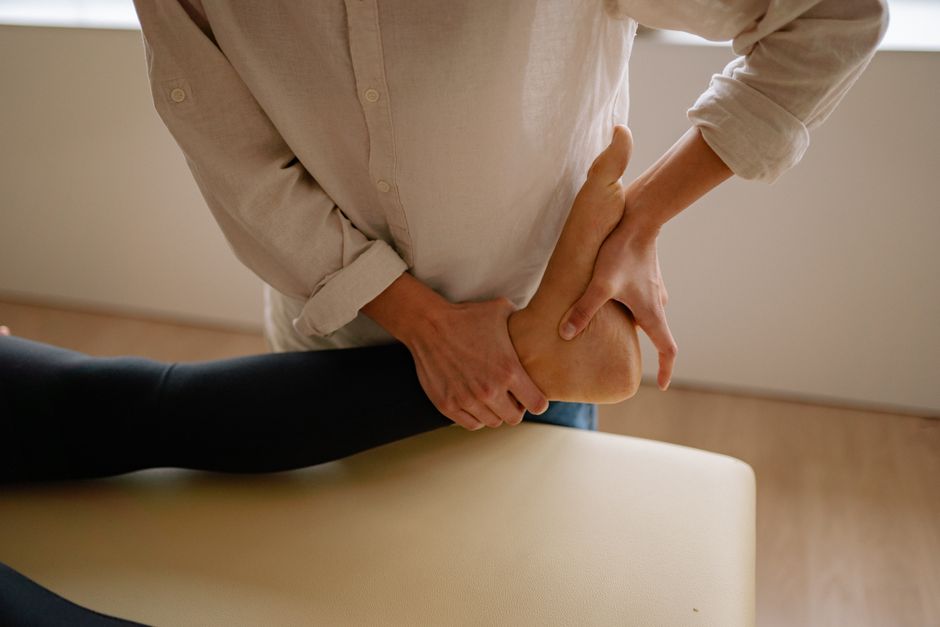
Massage can be a reasonable comfort tool for delayed-onset muscle soreness when the pain follows a hard workout without signs of injury, but it is not a shortcut to restored performance. Choose gentle self-massage or a qualified therapist based on comfort, budget, and access; choose medical evaluation instead when pain is severe, swollen, bruised, persistent, weight-bearing is difficult, or the body part looks deformed.
Will a massage help sore muscles recover after a workout?
Massage can reduce the felt burden of delayed-onset muscle soreness, but the useful promise is comfort, not a performance reset. The 2020 BMJ Open Sport & Exercise Medicine review found that manual sports massage was associated with improved soreness measures, while finding no evidence that it improves strength, sprint, jump, endurance, or fatigue outcomes.
That distinction changes the decision. If the aim is to make ordinary post-workout stiffness more tolerable, massage belongs in the conversation. If the aim is to erase fatigue or make the next hard session perform exactly the same, the evidence does not support treating massage as a fix.
Use the comfort-versus-capability check. Ask: “Is this a familiar, spread-out soreness after exertion, or a sharp, focal pain that changes how I move?” The first pattern can fit delayed-onset soreness. The second raises the stakes and should not be handled by simply increasing pressure.
| Option | Best fit | What the evidence supports | What it does not establish |
|---|---|---|---|
| Professional massage | Soreness where hands-on comfort and pressure adjustment are valued | Manual sports massage can improve soreness measures | Guaranteed performance recovery |
| Massage gun | Convenient self-care for short-term range of motion or stiffness | Short-term flexibility, range of motion, stiffness, and some recovery-related outcomes | Equivalence to hands-on massage or injury assessment |
| Foam rolling or gentle self-massage | Low-cost comfort experiment when symptoms are ordinary and tolerable | A way to control location and pressure directly | Diagnosis of the source of pain |
| Rest and gentle movement | Minor symptoms without serious injury signs | A lower-intensity alternative while symptoms settle | Permission to work through injury pain |
| Medical evaluation | Severe, persistent, swollen, bruised, or function-limiting pain | Assessment of potential injury rather than symptom masking | A massage substitute |
The 2023 International Journal of Environmental Research and Public Health review gives the massage-gun trade-off plainly: short-term flexibility and range-of-motion gains are plausible, while benefits for strength, balance, acceleration, agility, and explosive activity were not supported. A tool that feels good can still be the wrong tool for a performance claim.
How soon after exercise should I book a sports massage?
There is no research-backed universal booking window for post-workout massage, so timing should follow symptoms and safety rather than a calendar rule. The 2020 BMJ Open Sport & Exercise Medicine review reported that massage studies used varied techniques and protocols and did not establish one best timing, intensity, or style.
Start with the symptom pattern. Delayed-onset muscle soreness is different from pain that arrives during the workout, follows a specific incident, or quickly produces swelling and bruising. Massage is a comfort option for the former; it is not a screening method for the latter.
The National Institute of Arthritis and Musculoskeletal and Skin Diseases draws a firmer line for injury concerns: people should not work through pain from an acute or overuse injury. Its guidance says severe pain, swelling, bruising, inability to bear weight, an obvious deformity, or pain and swelling that do not resolve after a few days warrant medical evaluation.
For a minor injury without serious symptoms, the institute describes initially limiting activity and using ice; it also says heat should not be used immediately after an injury. That is why “book deep tissue immediately” is a weak rule. A stronger rule is: “First decide whether this is ordinary soreness or a possible injury; only then choose a comfort strategy.”
Budget matters, but clarity matters first. The same verification habit used when choosing a local service provider applies here: confirm what is being offered, what credentials support it, and what would change the decision. The process in How Do I Vet a Renovation Contractor in Toronto Before Signing? is a useful reminder that a business listing is not proof of qualifications.
Should I choose deep-tissue, sports, or Swedish massage for workout soreness?
Choose the approach based on the therapist's ability to adjust pressure and respond to your symptoms, not on a label that promises a tougher or faster recovery. The available post-workout evidence does not identify deep-tissue, sports, or Swedish massage as the single best style for soreness.
Sports massage is the most directly connected label to the research review, but “sports” does not guarantee a standard protocol. Swedish massage, according to Associated Bodywork & Massage Professionals, begins with broad, flowing strokes and can gradually increase pressure to address muscular tension. Deep-tissue massage signals a pressure-focused approach, not a reason to push through pain.
Use a pressure contract before the session. State the facts: “This soreness followed exercise. It is located here. This movement is limited in this way. Please start lighter and change approach if discomfort rises.” That reduces the therapist's guesswork and keeps the goal on comfort rather than proving tolerance.
Associated Bodywork & Massage Professionals advises clients to disclose health problems and medications and to communicate discomfort immediately so another approach can be taken. Its client guide also notes that clients can ask which methods a practitioner uses and request a particular technique.
For a local booking, verify the credential required where the practice operates. The Associated Bodywork & Massage Professionals 2024 state regulation guide shows that U.S. requirements vary and can involve a license, training, examinations, continuing education, CPR, and other checks. The practical question is not “Are they listed online?” It is “Do they hold the credential my state requires, and can they explain their approach to post-workout soreness?”
A simple decision sequence
Run this sequence before spending money or applying more pressure. First, screen for red flags: severe pain, swelling, bruising, inability to bear weight, deformity, or symptoms that persist beyond several days. Those signs point toward medical evaluation, not a massage upgrade.
Second, if the pattern is ordinary soreness, choose the lowest-complexity option that meets the goal. A massage gun, foam roller, or gentle self-massage can suit someone seeking convenient, short-term relief. A local therapist can suit someone who wants hands-on work, pressure adjustments, and a conversation about the workout history.
Third, communicate in observable terms rather than labels. Replace “Make it deep” with “Please begin gently; this area is sore after exercise, and I want the pressure adjusted if it becomes painful.” The recipient gets usable information. You get a safer, clearer session.
Frequently Asked Questions
Is a massage gun as effective as seeing a massage therapist?
No direct evidence establishes a massage gun as equivalent to hands-on sports massage. A 2023 systematic review found massage guns can support short-term range of motion, flexibility, stiffness, and some recovery-related outcomes, but the evidence base was small and limited. A massage gun is a practical self-care tool; it is not a substitute for evaluating a possible injury.
When is muscle pain too severe for a massage?
Treat pain as a medical-evaluation question rather than a massage-pressure question when it is severe, comes with swelling or bruising, makes weight-bearing difficult, involves an obvious deformity, or does not resolve after several days. The National Institute of Arthritis and Musculoskeletal and Skin Diseases says not to work through acute or overuse injury pain because continued activity can cause further harm.
What questions should I ask a local massage therapist before booking?
Ask what credential your state requires, whether the practitioner holds it, which methods they use for post-workout soreness, and how they adjust pressure when discomfort changes. Also state the workout, body area, symptoms, health conditions, and medications before the session. Associated Bodywork & Massage Professionals advises immediate communication if a technique is uncomfortable so another approach can be used.
Use this week's drill before any massage booking: write one sentence describing the workout, one sentence describing the pain pattern, and one sentence naming the outcome wanted. If that description contains a red flag, switch the next action from booking to medical assessment.
Sources
- BMJ Open Sport & Exercise Medicine
- National Institute of Arthritis and Musculoskeletal and Skin Diseases
- International Journal of Environmental Research and Public Health
- PubMed: The Effect of Percussive Therapy on Musculoskeletal Performance and Experiences of Pain
- Associated Bodywork & Massage Professionals
- Associated Bodywork & Massage Professionals State Regulation Guide
Disclaimer: This article is for general information only and is not medical advice. It is not a substitute for diagnosis or treatment by a qualified healthcare professional. Always speak to your doctor before acting on anything you read here.