
How Do I Choose a Mid-Morning Snack That Prevents an Energy Crash?
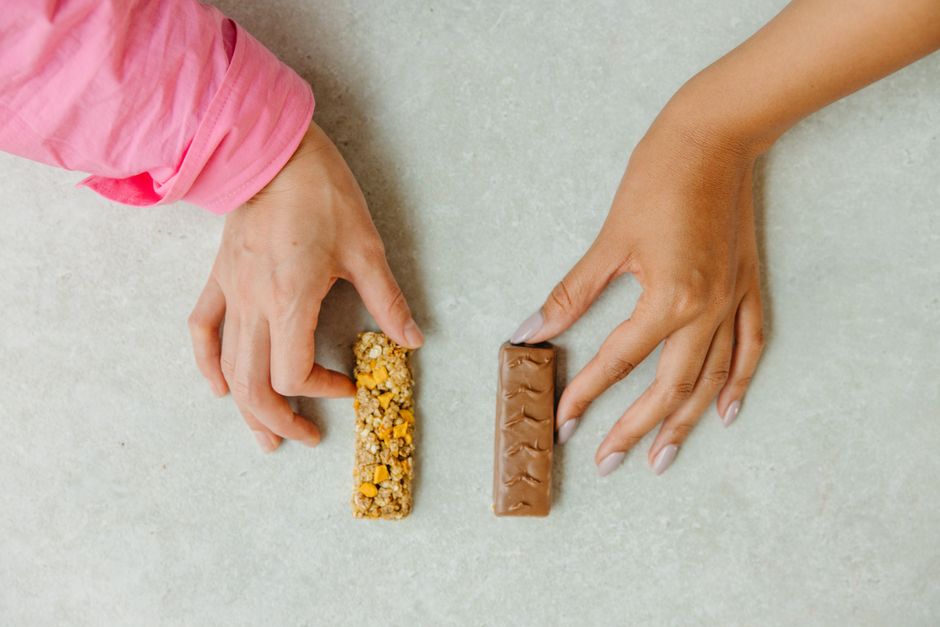
Choose a modest, planned snack that pairs produce or a whole grain with protein or healthy fat, then portion it before your day gets busy. Apple with peanut butter, raw vegetables with hummus, or a measured handful of nuts can bridge breakfast and lunch without becoming a second meal. Keep water nearby and do not expect another coffee to solve hunger.
Why am I hungry again by mid-morning?
You may be hungry because breakfast did not carry enough staying power, because you need a drink, or because caffeine is being asked to do a food job. Those are different problems. Treating all three with a vending-machine snack creates the familiar crash: quick relief, then another decision an hour later.
Use a quick three-part check before eating. First ask, “When did I last eat, and was it a full breakfast?” Next, drink water and pause long enough to notice whether the feeling changes. Then ask, “Would a plain, balanced snack sound good right now?” If yes, build one. If only a sweet or salty item sounds appealing, pause and make a deliberate choice rather than calling it an emergency.
The Coffee Gap: caffeine can feel like a shortcut, but it is not a reliable appetite strategy. In a randomized crossover study of 50 adults, the Journal of the Academy of Nutrition and Dietetics reported that caffeine's effect on energy intake was weak and transient, with no significant differences in total intake or appetite outside the laboratory. The practical replacement is simple: have coffee if you want coffee; have food if you need food.
Water belongs in the check because travel, desk work, and school runs make it easy to ignore a drink. The American Heart Association's travel-snack guidance recommends water or unsweetened iced tea for hydration. Put a bottle where the decision happens: beside the keyboard, in the cup holder, or in the school bag.
What is a healthy mid-morning snack that will not spoil my lunch?
A healthy mid-morning snack is a small, satisfying bridge: pair produce or a whole grain with protein or healthy fat, and stop at a defined serving. The goal is not to erase appetite. The goal is to arrive at lunch able to choose calmly instead of overcorrecting.
The American Heart Association says that snacks can fit a healthy dietary pattern when chosen thoughtfully and in moderation. Its useful pairing templates include apple slices with 1 tablespoon of no-salt-added or low-sodium peanut butter, and raw vegetables with low-sodium hummus. This is the Pairing Rule: one item brings volume or crunch; the other makes the snack feel finished.
| Routine | Snack move | Why it works |
|---|---|---|
| Office morning | Apple slices with 1 tablespoon of peanut butter | Produce plus a measured healthy-fat/protein partner |
| School-bag morning | Unsweetened dried fruit with a small handful of unsalted nuts | Portable foods with a clear portion boundary |
| Travel day | Fresh fruit with plain or lightly salted nuts | A practical alternative to sweets and salty convenience snacks |
| Need crunch | Air-popped popcorn with water | A whole-grain option that can feel substantial |
Portioning is the part people skip because it looks fussy. It is not fussy. It removes a decision when attention is already on emails, traffic, or getting out the door. For nuts, the American Heart Association defines a serving as a small handful or 1 ounce of whole nuts, or 2 tablespoons of nut butter. Put that amount in a container; do not keep a large bag within arm's reach.
Popcorn deserves a specific callout. In a short-term trial of 35 normal-weight adults, published in Nutrition Journal, popcorn produced stronger short-term satiety than potato chips. That does not turn every popcorn product into a free-for-all. It does give air-popped popcorn a clearer role than a snack chosen only for speed.
For packaged food, run the Label Pause before buying: check serving size, calories, added sugars, and sodium on the Nutrition Facts label. That is the American Heart Association's advice, and it prevents the classic mismatch between the serving on the package and the amount eaten at the desk. If weight loss is part of your goal, use the same practical scrutiny described in How to Choose a Weight-Loss App Without Falling for Belly-Fat Claims: look past a convenient claim and inspect what the choice actually asks you to do.
What snacks can I keep at my desk without refrigeration?
Keep shelf-stable foods that are easy to portion and still give you a real snack decision, not just a sugar hit. The American Heart Association lists roasted chickpeas, air-popped popcorn, whole-grain crackers, unsalted nuts and seeds, and unsweetened dried fruit as workable options.
Build a desk kit around three categories: a crunch option, a protein-or-fat option, and a fruit option. For example, keep whole-grain crackers, unsalted nuts, and unsweetened dried fruit in separate small containers. When hunger arrives, combine two categories instead of grazing through all three.
Weak setup: “There is a family-size bag in the drawer.” Stronger setup: “There are three single-snack containers ready for the week.” The second setup lowers cognitive load. It also makes the portion decision once, when you are not hungry.
For commuting and travel, carry the same kit in a bag and add fresh fruit when practical. The American Heart Association recommends carefully selecting trail mix and skipping versions with candy or chocolate. This is not about making food joyless; it is about avoiding a snack that behaves like dessert when you needed a bridge to lunch.
Research reviewed in Advances in Nutrition identifies whole-food snacks high in protein, fiber, and whole grains, including nuts, yogurt, prunes, and popcorn, as options that enhance satiety. Refrigerated yogurt will not suit every routine, so use shelf-stable nuts or popcorn for the desk and reserve yogurt for days when cold storage is available.
Run this week's drill: pack three portioned snacks before the work or school week starts. After each one, ask, “Did this carry me to lunch without making lunch feel unnecessary?” Keep the pairings that pass. Replace the ones that leave you hunting for a second snack.
Frequently Asked Questions
Should I have a mid-morning snack if I am trying to lose weight?
A mid-morning snack can fit a weight-management plan when it is planned, portioned, and genuinely needed. Evidence on snacking and obesity is mixed, so frequency alone is not the deciding factor; dietary quality and portion size matter. Choose a satisfying whole-food option and use the serving information rather than eating directly from a large package.
What should I eat when coffee is not fixing my morning fatigue?
Start with water and a snack that has substance, such as fruit with peanut butter or vegetables with hummus. A trial summarized in the Journal of the Academy of Nutrition and Dietetics found caffeine had weak, transient effects on energy intake and did not support caffeine as an effective appetite suppressant. If fatigue is persistent or unexplained, this article cannot diagnose its cause; discuss it with an appropriate health professional.
Sources
- American Heart Association: Healthy Snacking
- American Heart Association: Go Nuts, But Just a Little
- American Heart Association: Healthy Travel Snacks
- Journal of the Academy of Nutrition and Dietetics: Caffeine and Energy Intake Study
- Advances in Nutrition: Snacking, Satiety, and Weight
- Nutrition Journal: Popcorn and Short-Term Satiety